


Renowned Nigerian writer, Chimamanda Ngozi Adichie is among the recipients of this year’s Duke University honorary degree.
Back in March, President Vincent E. Price of Duke University confirmed that the Americanah author is on the list of receipients.
Adichie shared photos of the decorating ceremony on her Facebook page.
Adichie received the award alongside Mary Barra, Chairman of General Motors; Phil Freelon, lead architect for the Smithsonian National Museum of African American History and Culture; former Durham Mayor William Bell; Dr. William Kaelin, professor of medicine at Dana-Farber Cancer Institute; and Russell M. Robinson II, attorney, community leader and philanthropist.
See more photos below
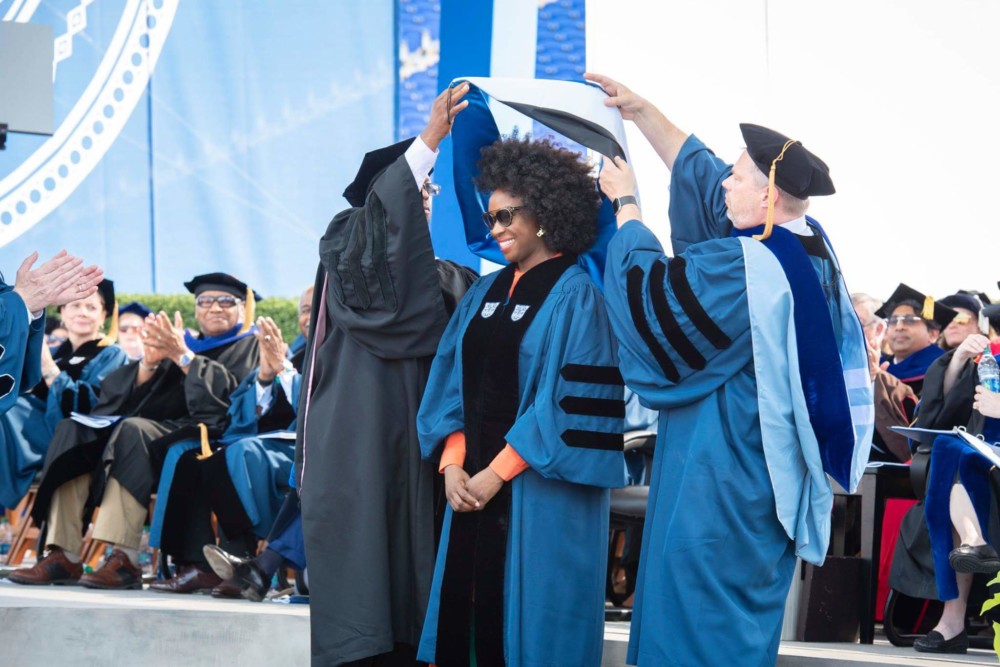
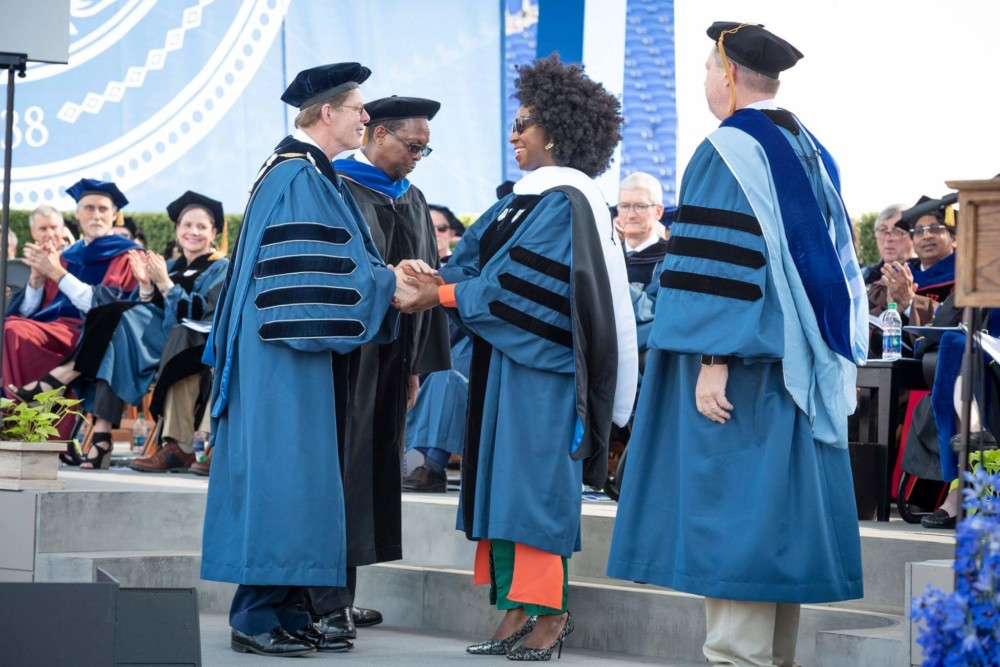
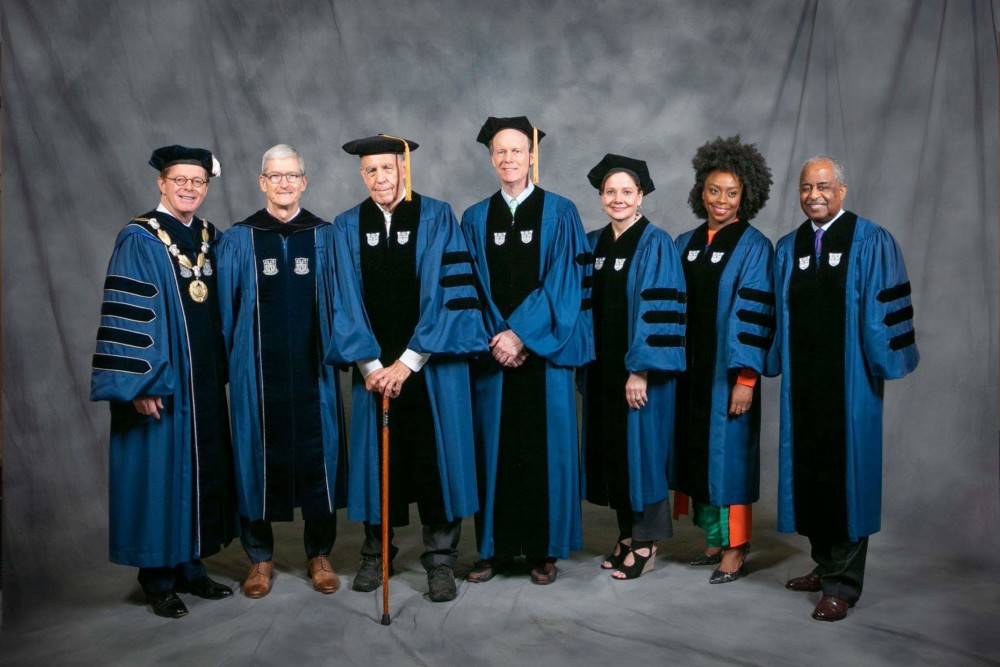
Photo Credit: Duke University

Nigerian author Chimamanda Ngozi Adichie, in an interview with VULTURE in New York, gave a detailed perspective into a lot of issues going on in today’s world. The author opened up on rape, raising children, Melania Trump, empathy and a lot of other topics.
Read excerpts below.
On wanting to tell the truth: I want to tell the truth. That’s where my storytelling comes from. My feminism comes from somewhere else: acute dissatisfaction. I don’t remember a time when I didn’t want to tell stories. Sadly, I also don’t remember a time when I wasn’t telling people what I think about the world.
On thoughts about raising a boy: If I had a boy, one of the things I would do is not just say it’s okay to be vulnerable, but also to expect him to respect vulnerability. Actually, shaming him into vulnerability is a good idea, because there’s so much about the way that masculinity is constructed that’s about shame.
What if we switch that shame around? Instead of shaming boys for being vulnerable, why don’t we shame them for not being vulnerable? I kind of feel — I was going to say I feel sorry for men, but I don’t want to say that.
On #MeToo changing gender and power dynamics in meaningful ways: I hope it does, but it hasn’t. What I like about #MeToo is the idea that now women’s stories have the possibility of being believed, which is almost revolutionary. Now a woman can tell her story and she might still get castigated, but there’s the possibility that she gets public support and that there are consequences for whoever harassed or assaulted her.
That’s not happened before. But the shape of the narratives around #MeToo can still be troubling. It’s the idea that a woman doesn’t deserve sympathy unless she’s “good.” I’m sorry to get into race, but it’s similar to what happens with black men, where in this country it seems that they are not deserving of sympathy unless they are pure. If a young boy is murdered because he was going off to buy Skittles but we learn that he smoked marijuana, then that somehow makes him not deserving of sympathy.
He shouldn’t have to be perfect to deserve sympathy and that applies to women as well. And, also, the way women are cast as innocent or blameless or helpless undercuts the idea of female agency. Often we’ll say things like, “She was coerced into going to the guy’s apartment.”
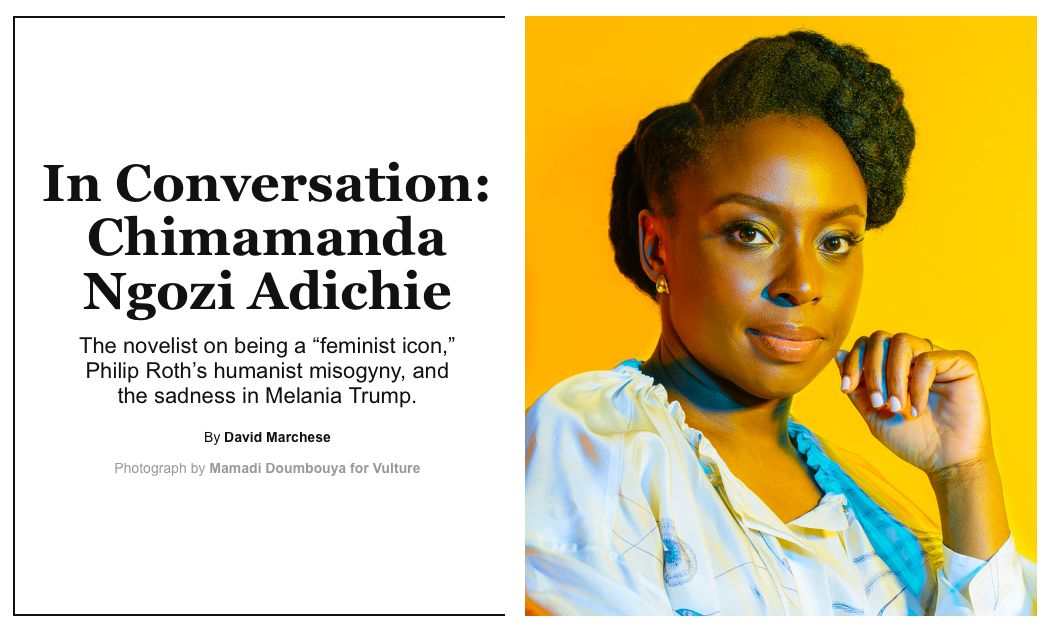
On raising her daughter: I wrote that [Dear Ijeawele] when I wasn’t a mother and it’s easier to write about a hypothetical child than to write about a real one. The child that book was addressed to is sort of an idea of a child. But having my own — you don’t realize how difficult it is day-to-day to combat negative ideas. Sometimes when you’re raising a child it’s like the universe is in a conspiracy against you.
You go to the toy store looking for something not necessarily “girly” and you’re overwhelmed by the pink and the dolls. Even the prayers my daughter got from family members: They’re like, “We hope she finds a good husband.” I’m optimistic that those kinds of things will change but I think about how women are socialized — even the most resistant women still get things under our skin.
On male and female literary differences: There are many things that a famous male writer can do without worrying about the risk of not being taken seriously — if you’re interested in fashion, for example. Very often women writers have to tread much more carefully because their grip on being considered as serious — which has nothing to do with how the world is — is more tenuous.
When a woman says something controversial, she’s much more likely to be criticized about her personality and even about how she looks. Not that men don’t get that, but women get it more quickly and more often. And to be specific to writing, a man can write about a subject like marriage and immediately it can be seen as an insightful take on society. But a woman writes about marriage and it’s seen as this smaller, more intimate thing.
We’ve gone past the point where women are directly criticized for their subject matter, but the language used about their writing hasn’t really changed. When men and women write about similar things, what the women write is often cast in less lofty terms.
On her short story about Melania Trump: There’s a sense in which her characterization in the story still holds true for me. There’s something I feel about her and it lives in the same emotional space as compassion and pity — and that feeling has increased. Actually, when I wrote that story I thought it was about Trump’s daughter [Ivanka]. I saw the story as making a case for how he [President Trump] is unstable but is surrounded by people who are stable and reasonable, such as his daughter and his wife.
There was also a very feminist take to the story’s premise, which was that the women around him know what they’re dealing with. There’s a kind of knowingness in dealing with somebody they care about but understand is crazy. I’ve since changed my mind about his daughter.
On Melania Trump: I look at pictures of her and I see great sadness. I don’t want anyone to be sad, but the idea that she might be sad about her situation is almost comforting because it reminds you that there’s still some sort of humane presence in the private space of the White House.
On being seen as a “feminist icon”: When I started, all I wanted was to write books that somebody would read. I didn’t plan to become this “feminist icon, which is something I feel uncomfortable with. People say, “This is what you’re known for.” But that’s not what I know myself for.
On motherhood and her art: I used to think I wouldn’t be a good mother because I was so dedicated to my art. I said to myself, I have nephews and nieces who I adore, and I helped raise them, so those will be my children. That’s what I thought for a long time, because I felt that I couldn’t be true to both my art and my child. Getting older [changed that]. I like to joke and say that you’re ready [to have a child] when your body isn’t ready, and when your body is ready, you’re not mentally ready.

Indeed So Young and yet so successful! Congratulations to Chimamanda Ngozi Adichie for being the first ever Black Woman to deliver the Harvard's Class Day keynote address since 1968.
The speech has been delivered over the years by the likes of former US Vice President under President Obama, Joe Biden; former President Bill Clinton; Facebook COO Sheryl Sandberg; Nobel Peace Prize laureate Mother Teresa; legendary music producer Quincy Jones; Federal Reserve Chairman Ben Bernanke; CNN Chief International Correspondent Christiane Amanpour; and Coretta Scott King, and the wife of Dr. Martin Luther King Jr.
You represent us well!


Chimamanda Ngozi Adichie is on Instagram! This is great news for all her fans – especially for those who love her unique style.
According to the author, she has been tasked by her nieces to open an official Instagram page and with it, she plans on kicking off a project to ‘Wear Nigerian’.
Quite exciting!
She says:
The Nigerian government’s disastrous economic policies have led to a reduction in the value of the naira and therefore in disposable income, a change in values, a disorientation of the middle class, and most of all, to a debilitating sense of uncertainty.
If we are to grasp for a silver lining, then the ‘Buy Nigerian to Grow The Naira’ rhetoric is one.
In that spirit, I recently decided to wear mostly Nigerian brands for my public appearances. (Before, by the way, President Buhari declared ‘Made in Nigeria dress’ days.)
In the past few weeks, I’ve bought more Nigerian brands than I ever have in the past. I’ve discovered new names. I’ve been filled with admiration for the women and men running their businesses despite the many challenges they face. I’m particularly interested in ‘inward-looking’ brands, those for whom dressing Nigerian women is as important as other goals.
I’ve changed quite a few dodgy zippers, been disappointed by some poor quality fabrics, and been impressed by some detail-oriented finishing. Overall, I love the clothes, their cut, their whimsy, their color, their flair, their ability to make me feel like myself. Their makers, from designer to tailor to button-fixer to okada-delivery-person, deserve to be supported.
At the suggestion of my very au fait nieces Chisom and Amaka – who think Aunty is a hilarious luddite dinosaur (and they have a point, sadly) – I am now on Instagram at chimamanda_adichie documenting my ‘Wear Nigerian’ project.
~CNA
See some of her fab style below.
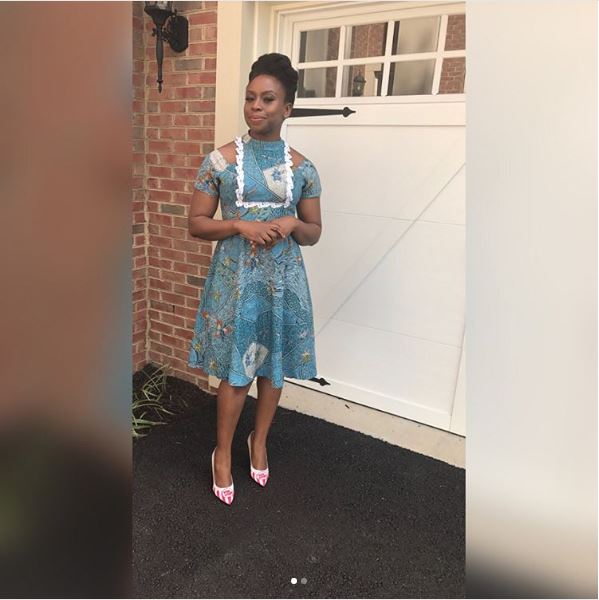
Chimamanda Ngozi Adichie | Outfit – @The_LadyMaker
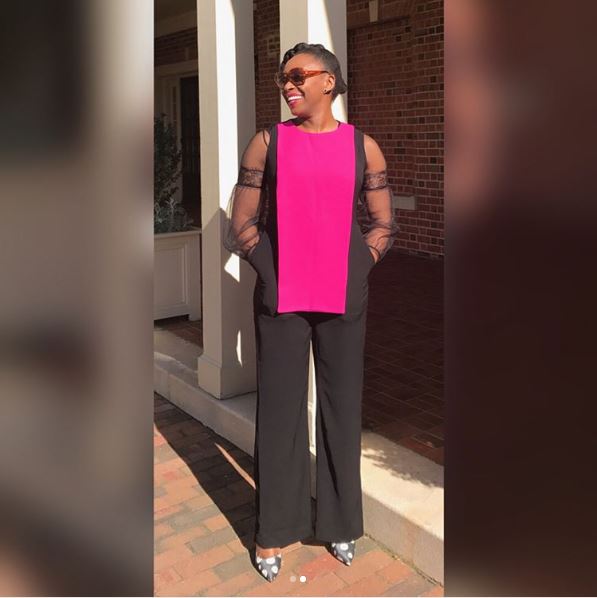
Chimamanda Ngozi Adichie | Outfit – @Nuraniyastudios
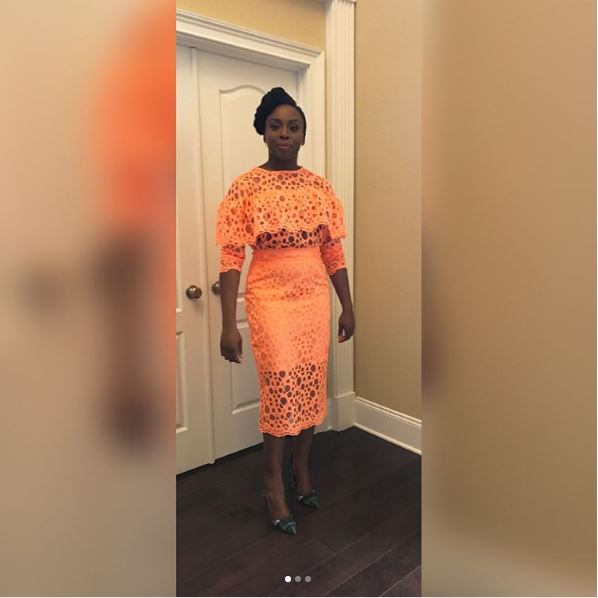
Chimamanda Ngozi Adichie | Outfit – @MsBeefab
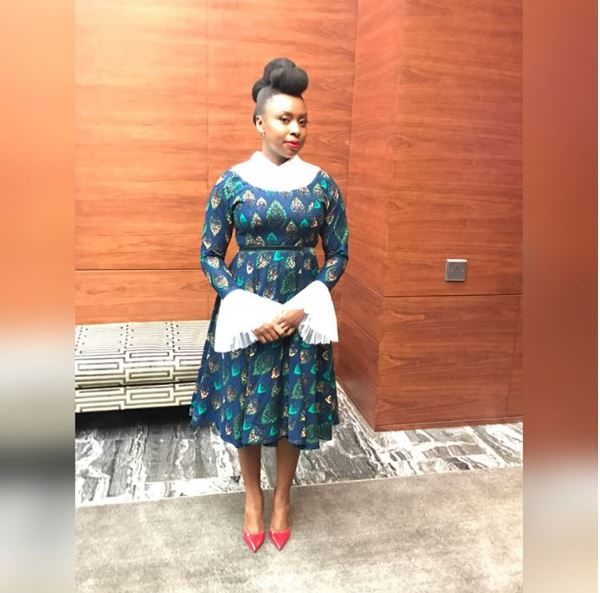
Chimamanda Ngozi Adichie | Outfit – @LolaBaej
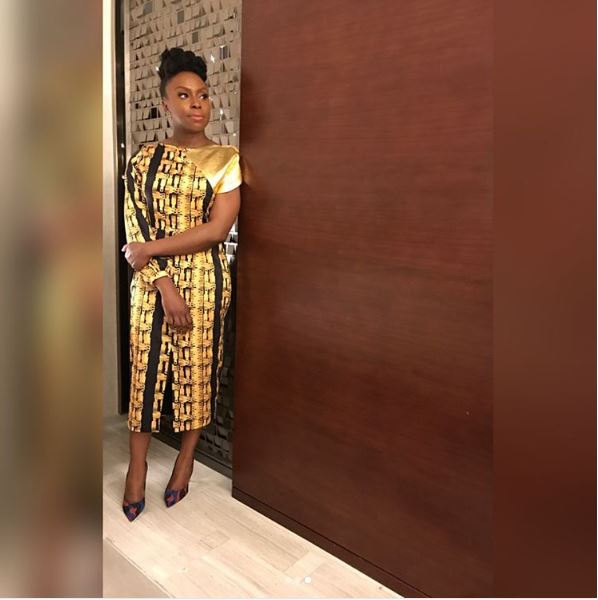
Chimamanda Ngozi Adichie | Outfit – @Greyprojects
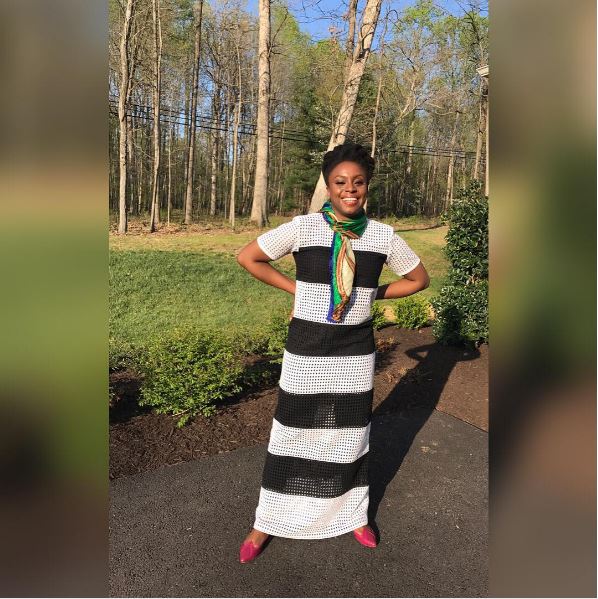
Chimamanda Ngozi Adichie | Outfit – @KareemAmak
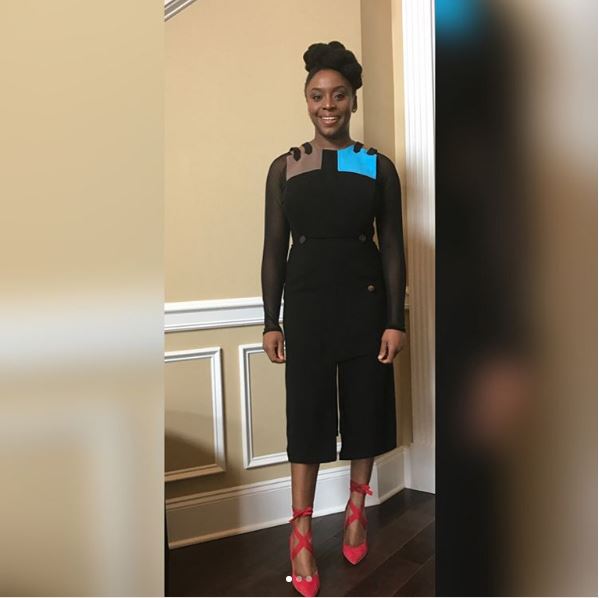
Chimamanda Ngozi Adichie | Outfit – @GozelGreen
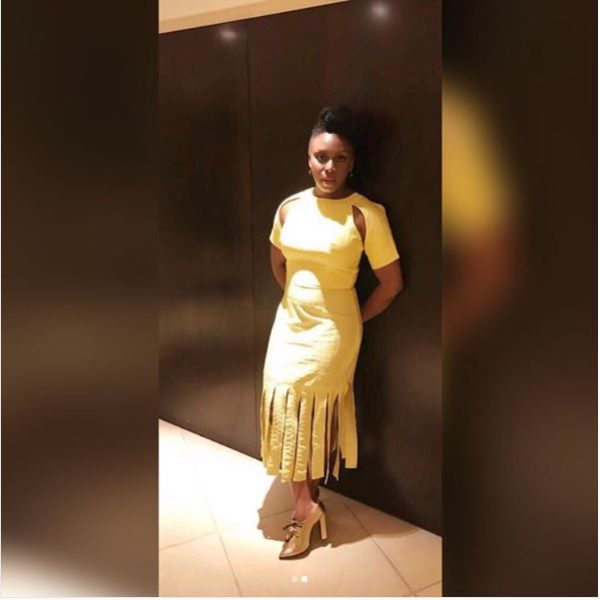
Chimamanda Ngozi Adichie | Outfit – @Fashpa

Chimamanda Ngozi Adichie | Outfit – @EricandAnna.ng
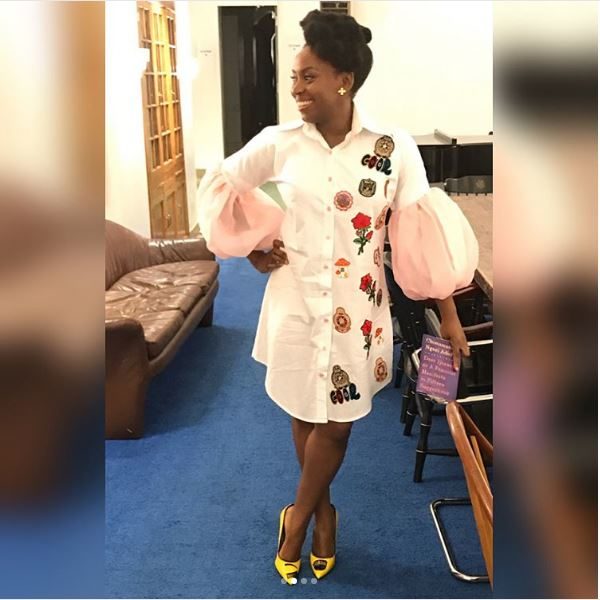
Chimamanda Ngozi Adichie | Outfit – @Dzynbabe

The novelist and feminist who attracted criticism for her comments on trans women doesn’t feel any remorseful for her thoughts.
The author of Half of a Yellow Sun plunged into a row about identity politics when she suggested in an interview recently that the experiences of transgender women, who she said are born with the privileges the world accords to men, are distinct from those of women born female. She was criticised for implying that trans women are not “real women”.
But according to the Guardian UK, Adichie defended her comments during a public appearance in Washington on Monday night.
“This is fundamentally about language orthodoxy,” she told a sellout event organised by the bookshop Politics & Prose. “There’s a part of me that resists this sort of thing because I don’t think it’s helpful to insist that unless you want to use the exact language I want you to use, I will not listen to what you’re saying.
“From the very beginning, I think it’s been quite clear that there’s no way I could possibly say that trans women are not women. It’s the sort of thing to me that’s obvious, so I start from that obvious premise. Of course they are women but in talking about feminism and gender and all of that, it’s important for us to acknowledge the differences in experience of gender. That’s really what my point is.”
“I didn’t apologise because I don’t think I have anything to apologise for,” she said. “What’s interesting to me is this is in many ways about language and I think it also illustrates the less pleasant aspects of the American left, that there sometimes is a kind of language orthodoxy that you’re supposed to participate in, and when you don’t there’s a kind of backlash that gets very personal and very hostile and very closed to debate.
“Had I said, ‘a cis woman is a cis woman, and a trans woman is a trans woman’, I don’t think I would get all the crap that I’m getting, but that’s actually really what I was saying.
“But because ‘cis’ is not a part of my vocabulary – it just isn’t – it really becomes about language and the reason I find that troubling is to insist that you have to speak in a certain way and use certain expressions, otherwise we cannot have a conversation, can close up debate. And if we can’t have conversations, we can’t have progress.”
Adichie distanced herself from academic feminism and said her new book, Dear Ijeawele, or A Feminist Manifesto in Fifteen Suggestions, is careful to avoid jargon. “I don’t really partake in that kind of language orthodoxy and there’s a part of me that really resists it. So I resist to be coopted into it.”
A campaigner for LGBTQ rights in Nigeria, Adichie is a star of the progressive left and not accustomed to finding herself on the receiving end of its ire. She said:
“It was unpleasant, and I think it was unpleasant not because of the sort of criticism and vitriol and hostility – which I’m used to, because I think if you make the choice to label yourself feminist publicly it just comes with the baggage – but in this case it came from my tribe, my tribe being women who believe in equality.
“But really, my position remains: I think gender is about what we experience, gender is about how the world treats us, and I think a lot of the outrage and anger comes from the idea that in order to be inclusive, we sometimes have to deny difference. I think that because human difference for so long, in all its various forms, has been the root of so much oppression, sometimes there’s the impulse to say let’s deny the difference, as though by wishing away the difference we can then wish away the oppression.”
This echoes over-optimistic claims of a post-racial society, the award-winning author continued. “In some ways it’s like the idea of colour-blindness, which is, I think, just a really hollow idea that if we say we don’t see colour, then somehow all the oppressions will disappear. That’s not the case …
“I think there were people who felt I was somehow making a point about the Oppression Olympics: you haven’t suffered enough. It’s not at all that. It’s simply to see that if we can acknowledge there are differences, then we can better honestly talk about things.”
Identity is the issue of our age: so why can’t we talk more honestly about trans women?
Adichie gave violence against transgender women, reproductive rights, participation in sport and the debate around same-sex schools as examples where such acknowledgement would broaden the feminist conversation. She insisted that she has always stood up for the rights of trans women and would continue to do so.
During a question and answer session, Adichie was asked about issues of “intersectionality”, the overlap of social identities such as race, gender and sexuality. She remained sceptical: “Speaking of language, even the word ‘intersectionality’ comes from a certain kind of academic discourse that sometimes I don’t know what it means.”
Feminism was a useful word to rally around despite understandable reservations, she added.
“I think the history of western feminism is one that is fraught with racism, and I think it’s important to acknowledge that, and at the same time to say that feminism is not the western invention, that my great-grandmother in what is now south-western Nigeria is feminist …
“I think white women need to wake up and say, ‘Not all women are white’, three times in front of the mirror.”
Source
The Guardiam

Subscribe to:
Posts
(
Atom
)


