

 |
| Front row from left: President Roch Kaboré of Burkina Faso; President Nana Akufo-Addo of Ghana; President Alpha Condé of Guinea; President Faure Gnassingbé of Togo; Chairman of the ECOWAS Authority of Heads of State and Government, President Mohammadu Buhari of Nigeria; President of the ECOWAS Commission, Jean-Claud Kassi Brou; President Alassane Ouattara of Côte d’Ivoire; President Mahamadou Issoufou of Niger Republic; President Julius Bio of Sierra Leone; and Former Nigerian Head of State, Gen. Yakubu Gowon, at the 54th Ordinary Session of the ECOWAS Authority of Heads of State and Government, in Abuja on Saturday |
The ECOWAS Heads of State and Government have charged Nigeria and Senegal to leave no stone unturned in ensuring the conduct of elections are peaceful, free and transparent.
The leaders, who gave the charge in a final communiqué issued at the just concluded 54th Ordinary Session in Abuja on Sunday, directed the ECOWAS Commission to provide the necessary support to the two countries.
“The Authority notes with satisfaction, the status of preparation for the general elections in Nigeria on Feb. 16, 2019 and the presidential election in Senegal on Feb. 24, 2019 and urges the government and relevant electoral bodies to leave no stone unturned in ensuring the elections are peaceful, free and transparent.”
They also lauded the smooth conduct of the presidential elections in Mali and congratulated President Ibrahim Boubacar Keita on his re-election.
They instructed the commission to take measures to support the democratic process and implement the Agreement and the roadmap of March 22.
On the political situation in Togo, the leaders commended the endeavors of President Nana Akuffo-Addo of Ghana, President Alpha Conde of Republic of Guinea and ECOWAS facilitators in the resolution of the crisis.
They noted the readiness of the Togolese Government to organise local elections in 2019 and encouraged the active involvement of all stakeholders for a peaceful process.
The Heads of State encouraged the Togolese Government to intensify the peace and confidence-building measures between all political stakeholders to further ease the socio-political situation.
They also urged security forces to demonstrate professionalism in their mission of maintaining order and ensuring the security of people.
On The Gambia, the Authority lauded the positive developments in the political and security situation and further took note of the Truth, Reconciliation and Reparation Commission.
They also called on the country to swiftly implement the security sector reform programme.
On Guinea Bissau, the Heads of State expressed concern on the continued delay in the conduct of parliamentary elections, taking note of the challenges involved.
They further encouraged stakeholders to work towards the conduct of the forthcoming parliamentary elections on March 10, 2019 and also urged the commission to intensify technical support for smooth electoral process.
“The Authority mandates the Chairman to impose sanctions on the basis of proposals for the President of the commission, against stakeholders who obstruct the smooth conduct of the electoral process,” they directed.
The leaders also reaffirmed the importance of peace, security and stability in ECOWAS for the economic development of the region.
They also reiterated their condemnation of terrorist attacks and expressed solidarity with the affected countries.
They lauded the cooperation among certain member states intending to effectively combat the scourge of terrorism and instructed the commission to support and extend cooperation to the states.
The Heads of State also urged member states to expediate the simplification of information and intelligence sharing mechanisms and the harmonisation of their legal systems to respond to terrorist attacks.
The 54th Ordinary Session of ECOWAS Heads of State and Government had in attendance nine presidents while five were represented.
They are presidents Muhammadu Buhari of Nigeria, Roch Kabore of Burkina Faso, Alassane Ouattara of Côte d’Ivoire, Nana Akufo-Addo of Ghana, Alpha Conde of Guinea, José Mário Vaz of Guinea Bissau, Issoufou Mahamadou of Niger, Julius Madaa Bio of Sierra Leone and Faure Gnassingbe of Togo.
Sengal was represented by its Prime Minister, Mahammed Dionne, while The Gambia, Mali and Liberia were represented by their foreign ministers.
Benin was represented by its ambassador to Nigeria while Cape Verde was not present at the meeting.

Although the sureties had anticipated that the detained ex-NSA would be handed over to them, sources, however, said the DSS boss might need to contact the presidency before finally handing over Dasuki to the sureties in compliance with the ruling of the court.
The warrant of release dated July 16, 2018, with a title: ‘Verification of Bail Conditions’ and signed by Deputy Chief Registrar, Mba Nkem A. Omotosho, was served on the DSS headquarters and the AGF in Abuja.
The warrant of release read in part: “Pursuant to the judgment Order made on Monday, July 2, 2018, granted by his lordship, Justice Ijeoma L. Ojukwu, directing various conditions to be fulfilled prior to the release on bail of the applicant (Dasuki).
“I have scrupulously verified the entire conditions of the bail as ordered by his lordship and the three ambits are fulfilled.”
“Hence, the respondents, the Director-General, DSS, and AGF are hereby notified as directed by his lordship for the subsequent compliance of same.
“Attached herewith is the enrolled order of the court and all the necessary bail documents for your perusal and aggrandizement.”
Before the latest judgment by Justice Ojukwu, the judge, on his fundamental human rights, Dasuki had previously perfected bails granted him by four different judges of high courts including Justice Ademola Adeniyi and Justice Ahmed Mohammed of the Abuja Federal High Court and Justice Hussein Baba-Yusuf and Justice Peter Affen of the FCT High Courts.
The ECOWAS Court of Justice also ordered his immediate release from detention.
At the time of this report, friends, associates, and well-wishers of the former NSA had stormed his residence eagerly awaiting his final release from detention by the federal government.
Dasuki is being prosecuted by the federal government for alleged corruption and possession of arms

The ECOWAS Court has asked the Nigerian government and the Imo state government to pay N100.09 million as special damages to a family whose property was demolished four years ago in Imo State.
The property was demolished under a 2009 Imo state law. The law allowed the government to pull down any property linked to anyone accused to be involved in kidnapping activities in the state.
It was adopted as part measures to curb the menace of kidnapping in the state.
In suit number ECW/CCJ/APP/13/14, Damian Onwuham and 22 others alleged the violations of their rights to fair hearing and effective investigation; right to presumption of innocence; right to property and right to dignity of the human person as guaranteed in the African Charter on Human and Peoples’ Rights.
They also accused the Imo state government of failing to carry out an impartial and effective investigation on the owners of the properties.
They described the continuous detention of the suspects as unlawful, as none of the applicants nor the suspected kidnapper has so far been charged to court.
They demanded N50 million as general damages; N100.09 million as special damages for the reconstruction and furnishing of the demolished buildings, and exemplary damages N500 million.
The federal government is the first defendant in the case while the Imo government is second defendant.
But, the court in its judgment delivered on Tuesday said the April 12, 2014 demolition of the property was not only illegal, but also unlawful.
Also, the court described the allegation of Mr Onwuham’s involvement in kidnapping as unsubstantiated, while the demolition of the property on account of an allegation of the offence of kidnapping without trial was a violation of Articles 7 and 14 of the African Charter on Human and Peoples’ Rights.
Details of the award were contained in a statement from the court sent to Colossus Gists on Thursday.
The statement said the award represented the total cost of the buildings and other household items destroyed by agents of the Imo State government during the demolition exercise.
They include one unit of bungalow of 15 bedrooms and two sitting rooms, along with another bungalow of seven bedrooms and a sitting room and a third bungalow of six bedrooms and a sitting room.
The Court also awarded additional N20 million to the family as general damages for the violation of the Mr Onwuham’s fundamental rights to fair hearing, human dignity and right to property, although the family’s claims for exemplary damages were rejected.
A three-member panel of the court presided by Justice Friday Nwoke also directed the government to investigate the circumstances that surrounded the disappearance of Mr Onwuham’s son, Obinna.
The other members of the panel included Justices Yaya Boiro and Alioune Sall.
Where an offence was found to have been committed by those behind Obinna’s disappearance, the court asked for the prosecution of the culprits.
Obinna, the alleged kidnapper, was allegedly handcuffed and taken away from the family home on December 19, 2012 by members of ‘Operation Rescue Imo’, a state security outfit comprising of policemen, soldiers, members of the State Security Service and the Civil Defence Corps.
Although the court acknowledged the ‘devastating effect’ of kidnapping on the economy and safety of citizens of any state confronted with the menace, which justifies the ‘drastic measures,’ it held that such ‘measures have to be within the confines of the law.
This, the court noted, would have regard to what is fair and just and in the circumstance avoid acts that tend to violate the right of others.
“It appears the anti-kidnapping law of the defendant, if it exits, prescribes punishment without recourse to trial by an independent tribunal, which is inconsistent with international best practices that provides for trial by a Court or Tribunal for any offence created by law as well as against ‘all known human rights norms for punishment to be imposed on a suspect without the necessity of a trial,” the panel said
“Such a law is punitive, obnoxious and indeed an exhibition of the highest point of impunity. If allowed under any guise, then all of us are endangered species,” the panel added.
The panel also criticised the demolition of the property based on the State anti-kidnapping law as a form of collective punishment that is neither consistent with international law, particularly the International Covenant on Civil and Political Rights, nor Nigeria’s 1999 Constitution.
In its defence, the federal government denied knowledge of the alleged actions and attached a document signifying that the security initiative – “Operation Rescue Imo” was an initiative of the Imo State government.

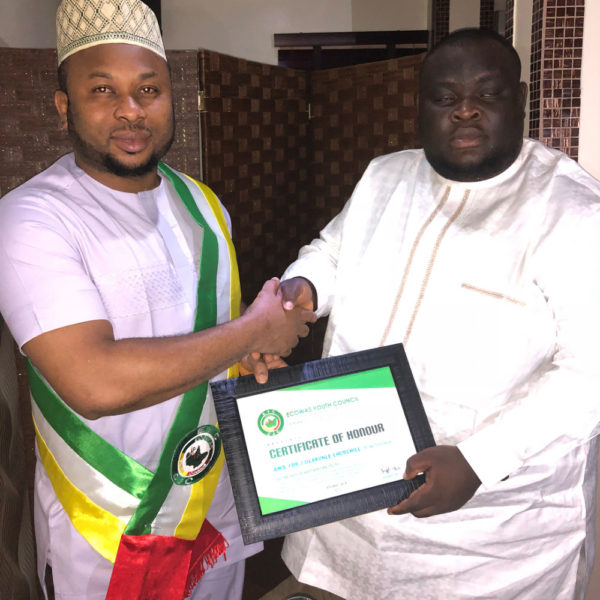
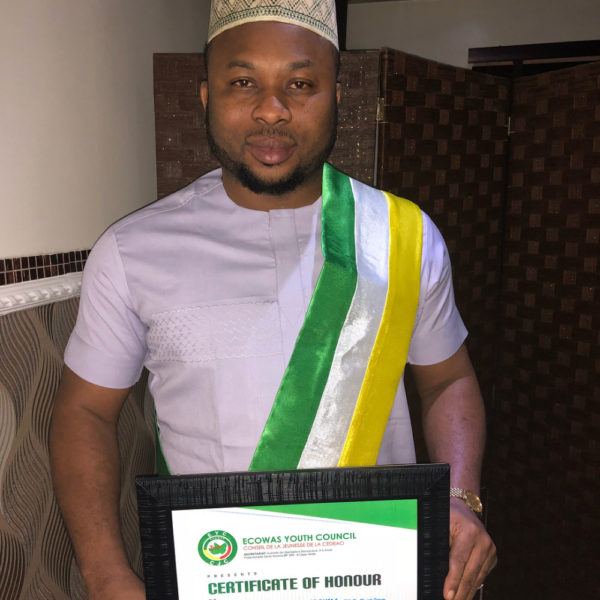
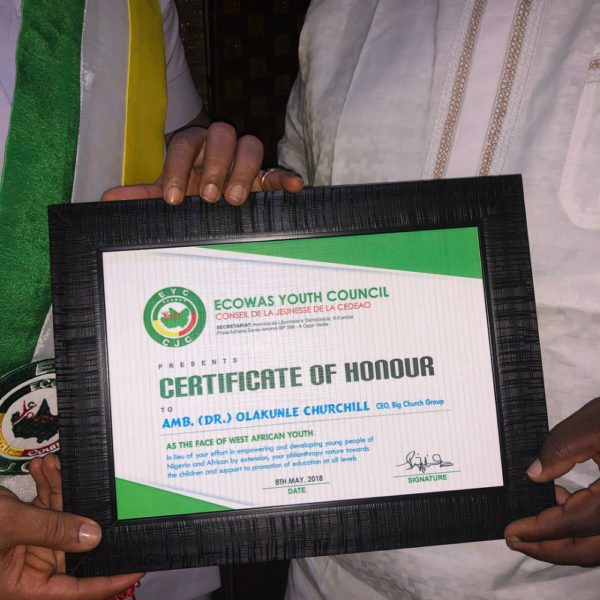
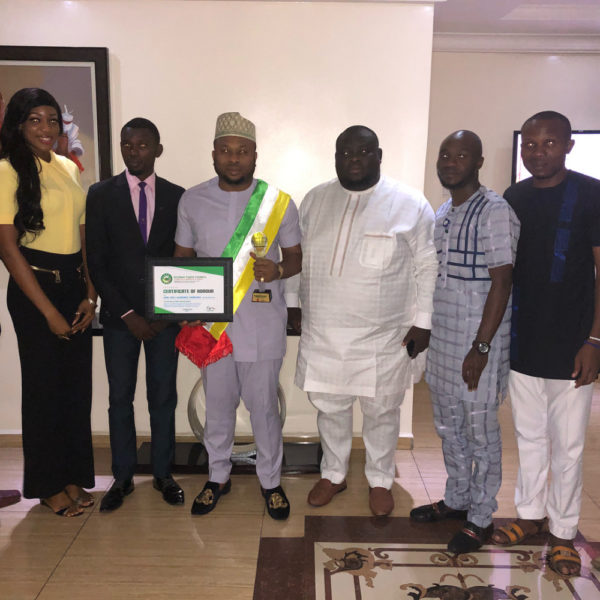
Entrepreneur and philanthropist Olakunle Churchill has been made the face of Economic Community of West African States (ECOWAS) youths.
Churchill shared the news on his Instagram, sharing videos of the award ceremony. He wrote:
Thanks to the president and members of ECOWAS YOUTH COUNCIL for making me the face of ECOWAS youths. Thanks for deeming it fit to host and honour me, after a long flight from different parts of Africa.
See photos from the ceremony and the post below:

Economic Community of West African States (ECOWAS) ministers in charge of Telecommunications and Information Communications Technology (ICT), have approved free regional roaming regulation for member states.
A statement by the ECOWAS Commission said the regional roaming regulation was endorsed at the 15th Meeting of the ministers held in Praia, Cabo Verde.
ECOWAS Commissioner for Telecoms and ICT, Dr Isaias Barreto da Rosa, described the decision as “historic and something expected to touch the lives of ordinary ECOWAS citizens and bring tremendous contributions to our regional integration process as we strive to establish a single digital market in the sub-region and as we move from an ECOWAS of States to an ECOWAS of people.”
The approved free regional roaming regulation includes a clear implementation roadmap which will start at the beginning of 2018.
“A number of other important decisions were also made to foster the development of the ICT sector in West Africa”, the statement added
“This includes a revised supplementary act on Universal Access and Service and its funding for digital access.
“In addition to these is a list of laboratories selected for the accreditation of DTT decoders in the region to ensure compliance with the ECOWAS adopted standards; Regional Spectrum Coordination Committee, etc.
“Another important subject discussed during this meeting was the promotion of cyber security in West Africa and the ECOWAS cyber security agenda.
“This initiative aims at assisting ECOWAS member states to develop their national cyber security strategies, to establish national Computer Emergency Response Team (CERT) as well as to improve cyber legislation and train judges prosecutors, law enforcement agents, etc.
“Experts from ECOWAS member states had met in Praia from 2nd to 5th October 2017, preparatory to the ministerial meeting”.
Subscribe to:
Posts
(
Atom
)


