


President Donald Trump has invited Russian President Vladimir Putin to the White House this fall for a second get-together, even as cleanup from the first continues with no letup.
A White House meeting would be a dramatic extension of legitimacy to the Russian leader, who has long been isolated by the West for activities in Ukraine, Syria and beyond.
No Russian leader has visited the White House in nearly a decade.
Press Secretary Sarah Huckabee Sanders says Trump has asked National Security Adviser John Bolton to invite Putin, and “those discussions are already underway.”
Trump tweeted earlier that he looked forward to “our second meeting” as he defended his performance at Monday’s summit.

With rattled world capitals watching, President Donald Trump and Russia’s Vladimir Putin are ready to go one-on-one in a summit that plays out against a backdrop of fraying Western alliances, a new peak in the investigation into Russian election meddling and fears that Moscow’s aggression may go unpunished.
Monday’s meeting was condemned in advance by an assortment of members of Congress from both parties after the U.S. indictment last week of 12 Russian military intelligence officers accused of hacking Democrats in the 2016 election to help Trump’s presidential campaign. Undeterred, the American president is set to go face-to-face with Putin, the authoritarian leader for whom he has expressed admiration.
The meeting comes as questions swirl about whether Trump will sharply and publicly rebuke his Russian counterpart for the election meddling that prompting a special counsel probe that Trump has repeatedly labeled a witch hunt.
While Trump was eager for a made-for-TV spectacle that will dominate headlines like his sit-down with North Korean leader Kim Jong Un last month, the Kremlin’s primary mission was simply the occurrence of the summit. Putin hopes the meeting, mere hours after he presided over the World Cup finals, will help him forge good personal ties with Trump and focus on areas where Moscow and Washington could find common ground, such as Syria.
The two leaders first meet one-on-one in the Finnish presidential palace’s opulent Gothic Hall, then continue their discussions with an expanded group of aides and over lunch in the Hall of Mirrors, once the emperor’s throne room. The leaders will then take questions at a press conference before going their separate ways.
Putin will likely not be shooting for official recognition of Russia’s 2014 annexation of Crimea or easing of the crippling U.S. sanctions, aware that the U.S. Congress would never allow such action. But he would welcome a symbolic end to Western protests over Crimea and Moscow’s attempts to destabilize elections and traditional Western alliances and norms.
Trump unleashed his own attacks on those very institutions before arriving in Finland.
In an interview with CBS that aired Sunday, Trump described the European Union, a bloc of nations that includes many of America’s closest allies, as a “foe.”
“I think the European Union is a foe, what they do to us in trade,” Trump said.
That attack on the alliance came on the heels of Trump’s jarring appearance at a NATO summit in Brussels, where he harshly criticized traditional allies over “delinquent” defense spending only to later confirm his commitment to the military alliance that has long been a bulwark against Russian aggression.
And on the eve of his meeting with Putin, who has cracked down on the free press, Trump unleashed a series of attacks on the media as Air Force One descended into Helsinki, complaining that Democrats and the press were unlikely to give him credit for any summit accomplishments.
“Unfortunately, no matter how well I do at the Summit, if I was given the great city of Moscow as retribution for all of the sins and evils committed by Russia over the years, I would return to criticism that it wasn’t good enough – that I should have gotten Saint Petersburg in addition!” Trump tweeted. “Much of our news media is indeed the enemy of the people and all the Dems know how to do is resist and obstruct!”
In his next tweet, he congratulated Putin on hosting “one of the best ever” World Cup tournaments.
“Russia has done nothing to deserve us meeting them in this way,” said Nina Jankowicz, a global fellow at the Wilson Center’s Kennan Institute who specializes in Russia, Ukraine and disinformation. For Putin, she added, “not only is this a P.R. coup no matter what happens, Trump could say nothing and it would help to legitimize his regime.”
Hovering over Helsinki is the specter of the 2016 election interference and ongoing special counsel Robert Mueller’s investigation into possible collusion between Trump campaign officials and Russia.
Trump said in Britain last week — another chaotic stop on his European tour — that he would raise the issue of election meddling with Putin even as he played down its impact.
“I don’t think you’ll have any ‘Gee, I did it. I did it. You got me,'” said Trump, invoking a television detective. “There won’t be a Perry Mason here, I don’t think. But you never know what happens, right? But I will absolutely firmly ask the question.”
Trump also said in the CBS interview that he had given no thought to asking Putin to extradite the dozen Russian military intelligence officers indicted this past week in on charges related to the hacking of Democratic targets.
But after being asked about that by his interviewer, Trump said “certainly I’ll be asking about it” although extradition is highly unlikely. The U.S. doesn’t have an extradition treaty with Moscow and can’t force the Russians to hand over citizens. Russia’s constitution also prohibits turning over citizens to foreign governments.
Putin is likely to strongly reaffirm his denial of any meddling and cast the U.S. charges as unfounded.
The Russian Foreign Ministry rejected last week’s indictment as part of a “shameful comedy” staged by those in the U.S. who try to prevent the normalization of Russia-U.S. ties, arguing that it doesn’t contain evidence to back the accusations.
On Syria, a possible deal could see Moscow helping mediate the withdrawal of Iranian forces and their Hezbollah proxies from the areas alongside Syria’s border with Israel — a diplomatic coup that would reflect Russia’s carefully cultivated ties with both Israel and Iran.
While both Putin and Trump spoke about the need to discuss arms control issues, they are unlikely to make any quick deals. They may underline the importance of continuing the discussions, setting the stage for discussions on expert level.
___
Reporter:
Isachenkov
Moscow.

The Russian government has expressed a desire to expand relations with Africa, particularly those countries it has diplomatic relations with.
President of the Russian Federation, Vladimir Putin, made the disclosure in a congratulatory message sent to heads of state and government of African countries on the occasion of the African ‘National Day.’
According to a statement issued by the Russian embassy in Abuja, President Putin, recognized the developmental strides the continent had achieved since gaining independent as well as efforts towards economic integration both at the subregions and the region.
While commending Africa’s strong visibility in international affairs, Putin in the statement pledged the desire of Russia to support and partner with Africa for greater development.
The statement read, “Please accept my sincere congratulations on the occasion of Africa Day, a significant holiday symbolizing the aspirations of the peoples of your continent to freedom, peace and unity.
“For decades of independent development, African countries have achieved considerable success in social and economic spheres. Within the framework of the African Union, as well as their regional and sub-regional associations, mutually beneficial integration processes are being promoted, and coordination of actions to resolve local conflicts and crises has been established.”
“Russia government notes with satisfaction the growing role of African States in international affairs and supports the efforts to build a just and democratic world order, and to counter terrorism, extremism, trans-border crime, and other threats and challenges to regional and global security.
“Let me reiterate that the Russian Federation is ready to expand the traditionally friendly relations with African partners, both bilaterally and in various multilateral formats, and to continue its active participation in the programs of assistance for Africa under the auspices of the UN, G20, and BRICS”.

Garry Kasparov has a message for those who didn’t foresee Russia’s meddling in the 2016 U.S. presidential election: “I told you so.”
“I’ve been saying many of the same things about Vladimir Putin for over 17 years,” Kasparov, the former world chess champion and political activist, said at a conference on activism here Monday. Other attendees included former New York City Mayor Mike Bloomberg, human rights activist Kerry Kennedy and David Hogg, a Florida high school student who has emerged as a gun control advocate.
Kasparov — whose 2015 book, “Winter Is Coming,” warned of Putin’s rise as a dictator on the global stage — said he voiced his concerns about the Russian president to anyone who would listen.
“Putin is not a democratically elected leader — he is a dictator,” Kasparov said, recalling remarks from a 2007 conference he attended in Washington, D.C. “I said, yes, Putin was a bad guy. He was Russia’s problem, but if he wasn’t contained, he would be a regional problem — and soon after, everybody’s problem.”
Kasparov said Russia’s spread of so-called fake news across American social media networks — part of a disinformation campaign aimed at undermining the U.S. elections — was “nothing new for us in Russia.”
“The sad news is propaganda works,” he said. “Fake news works.”
By the time Putin took aim at the U.S., Kasparov said, his cyber army had more than 10 years of experience in such attacks.
Kasparov — originally from Azerbaijan, the former Soviet republic — has been living in forced exile in New York City since 2013. He did not mention special counsel Robert Mueller’s ongoing investigation into the Trump campaign’s contacts with Russia. But he suggested where there’s smoke, there’s fire.
“Donald Trump had more Russian connections than Aeroflot,” Kasparov said in his remarks at the University Club, just two blocks south of Trump Tower.
“While I believe in coincidences, I also believe in the KGB.”
“Every country has its own mafia,” he continued. “In Russia, the mafia has its own country.”
Still, Kasparov echoed the conclusions of U.S. intelligence officials that the Kremlin will continue to target elections, in the U.S. and abroad.
“Putin will attack again, here and elsewhere,” Kasparov said. “He has no choice. He needs enemies — big ones.”
Kasparov said that to combat Putin, Americans must put value in democracy and the truth.
“You can’t defend yourself against Putin and the Putins of this world if you don’t believe what they are attacking is worth defending,” he said.
Source
Yahoo!

World leaders should boycott Russian President Vladimir Putin’s VIP box at next month’s World Cup opening unless he takes steps to protect Syrian civilians, Human Rights Watch said Tuesday.
Russia, which hosts the world’s most-watched sporting event for the first time this year, is a key backer of Syrian President Bashar al-Assad’s regime and arguably the most powerful broker in the seven-year-old war.
“In hosting one of the most televised events in the world, Russia is courting world public opinion and looking for respect,” HRW’s executive director, Kenneth Roth, said in a statement.
“World leaders should signal to President Putin that unless he changes track and acts to end atrocities by Russian and Syrian forces in Syria, they won’t be in their seats in the VIP box with him on opening night.”
Billions of people worldwide are expected to watch the World Cup on television and HRW argued that Moscow’s responsibility in the suffering of Syrian civilians should not be forgotten.
Russia is the main exporter of weaponry to the Syrian regime and its forces provide on-the-ground support to government forces and allied militia.
The New York-based watchdog has documented Russian-Syrian joint military operations that “have caused thousands of civilian casualties”, including recently in Eastern Ghouta near Damascus.
Roth warned that millions of other civilians faced the same fate in upcoming operations, especially in the northwestern province of Idlib that still largely escapes government control.
“World leaders should not allow a sporting event to gloss over a pattern of atrocities in Syria that now looms over two million civilians,” he said.

Hundreds of protesters angered by the impending inauguration of Vladimir Putin for a new term as president of Russia demonstrated throughout the country on Saturday but were eventually arrested by the police.
The arrested protesters included protest organizer, Alexei Navalny, the anti-corruption campaigner who is Putin’s most prominent foe.
Police seized Navalny by the arms and legs and carried him from Moscow’s Pushkin Square, where thousands were gathered for an unauthorized protest.
Demonstrations under the slogan “He is not our czar” took place throughout the country, from Yakutsk in the far northeast to St. Petersburg and Kaliningrad on the fringes of Europe.
OVD-Info, an organization that monitors political repression, said more than 350 people had been arrested nationwide, but that figure came before protests in the western reaches of Russia had ended.
The Interfax news agency cited a police source as saying more than 140 people had been arrested just in Moscow alone, where the square was cleared after about two hours but demonstrators milled around nearby.
Navalny was to be charged with organizing an unauthorized meeting, Russian news agencies said, though when he would face a judge was not immediately clear. Navalny has served several multi-week stretches in jail on similar charges.
In St. Petersburg, police blocked off a stretch of Nevsky Prospekt as a crowd of about 1,000 marched along the renowned avenue. A video showed some demonstrators being detained.
Putin is to be inaugurated for a six-year term on Monday after winning re-election in March with 77 percent of the vote.
Navalny had hoped to challenge him on the ballot but was blocked because of a felony conviction in a case that supporters regard as falsified in order to marginalize him.
Navalny has called nationwide demonstrations several times in the past year, whose turnout has rattled the Kremlin.
Saturday’s protests attracted crowds of hundreds in cities that are far remote from Moscow, challenging authorities’ contention that Navalny and other opposition figures appeal only to a small, largely urban elite.

FIFA’s disgraced ex-president Sepp Blatter has told AFP he will go to next year’s World Cup in Russia at the invitation of President Vladimir Putin, despite being banned from football.
“I will go to the World Cup in Russia. I received an invitation from President Putin,” the 81-year-old said in an interview.
Blatter said Michel Platini, the ex-UEFA president who is banned from football over corruption, had also been invited to the tournament by Putin.
But according to one of his close allies Platini “hasn’t received an invitation from Putin to go to the World Cup and doesn’t know what he will be doing next summer”.
Blatter, who led world football’s governing body for 17 years, was thrown out of the sport in 2015 at the height of a massive corruption scandal.
FIFA’s ethics committee has suspended him from all football-related activities for six years after finding him guilty of accepting an improper 2 million Swiss franc ($2.1 million, 1.8 million euros) payment from then-UEFA chief Platini.
But the ever-defiant Blatter said he had no plans to miss the World Cup, an event he has habitually attended since going to work at FIFA in the 1970s.
“I don’t know how long I will go for, whether I will be there for the opening match or the final,” he said during the interview in Zurich.
“Because I can’t work in football and I don’t have an assignment to do, maybe I will only make a short visit.”
Blatter is also the target of an investigation by Swiss prosecutors over alleged criminal mismanagement at FIFA and the infamous Platini payment.
Switzerland has ongoing probes into the 2018 World Cup, including possible bribery and corruption that may have led to Russia winning hosting rights.
“I’m sure that World Cup 2018 will be a great World Cup. Russia has to show that it can welcome the whole world. It’s a big challenge,” Blatter said.
It was not immediately clear how the FIFA ban would impact Blatter’s attendance at matches or events.
Platini, banned from football for four years, was allowed to attend Euro 2016 matches in his native France, provided he played no official role.

Russia’s president Vladimir Putin has reportedly ordered the issue of the national cryptocurrency, the “cryptoruble.” The Russian Minister of Communications and Mass Media has revealed some details of this new currency.
Putin’s Executive Order

Nikolay Nikiforov.
Russia’s Minister of Communications and Mass Media, Nikolay Nikiforov, said at a closed meeting with members of the Moscow Capital Club that Putin has ordered the issue of the country’s own cryptocurrency, the cryptoruble, AIF newspaper reported on Saturday.
This decision followed the meeting that Putin had with Russia’s top regulators last week where he instructed the central bank not to create “unnecessary barriers” to cryptocurrencies. Referring to the text of the government’s decree on the issuance of the cryptoruble, Nikiforov said:
I so confidently declare that we will [soon] launch a cryptocurrency for one simple reason: If we do not, then in 2 months, our neighbors in the Eurasian Economic Community will do it.
Preliminary Details of Cryptoruble
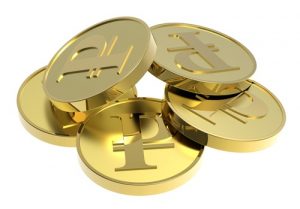
Putin Orders the Issue of Russia's National Cryptocurrency – the CryptorubleNikiforov believes that “the cryptoruble will be issued quickly,” the publication noted. The official also said that the efficiency of the new cryptocurrency will “streamline the payment of personal income tax,” which would make the new currency legal tender in Russia.
The country currently has a flat 13 percent income tax rate. However, Putin has called for a reform of the tax system in order to boost economic growth. He ordered the tax code to be adjusted in 2018 and be implemented in 2019, according to The Moscow Times.
While Nikiforov said the details of the cryptoruble have yet to be discussed, AIF reported him explaining:
When buying and selling a cryptoruble, the amount will be 13% from the earned difference…If the owner can not explain the reason for the appearance of his cryptorubles, when converting them into Russian rubles, the tax for him will be 13% of the total.
Furthermore, the cryptoruble cannot be mined, the minister noted, adding that “most likely, it will be a closed model with a certain volume of regulated emissions.”
Russia’s Central Bank advocated for a national cryptocurrency earlier this month. Deputy Governor, Olga Skorobogatova, said at the Finopolis forum of innovative financial technologies that the bank sees many benefits in a state-run cryptocurrency. Also among the supporters for a national cryptocurrency is First Deputy Prime Minister Igor Shuvalov, who said in August that a cryptoruble should exist.
Cryptoruble Is Not Legalization of Cryptocurrencies
Regarding the regulation of cryptocurrencies, the minister explained that:
The creation of the cryptoruble would not equal the legalization of bitcoin and other cryptocurrencies. Russia’s cryptocurrency should use Russian cryptography.
After the meeting with Putin last week, the regulators decided that Russia will regulate cryptocurrencies. The finance ministry is working with the central bank to draft a bill which is expected by the end of the year, according to Finance Minister Anton Siluanov.
Subscribe to:
Posts
(
Atom
)


